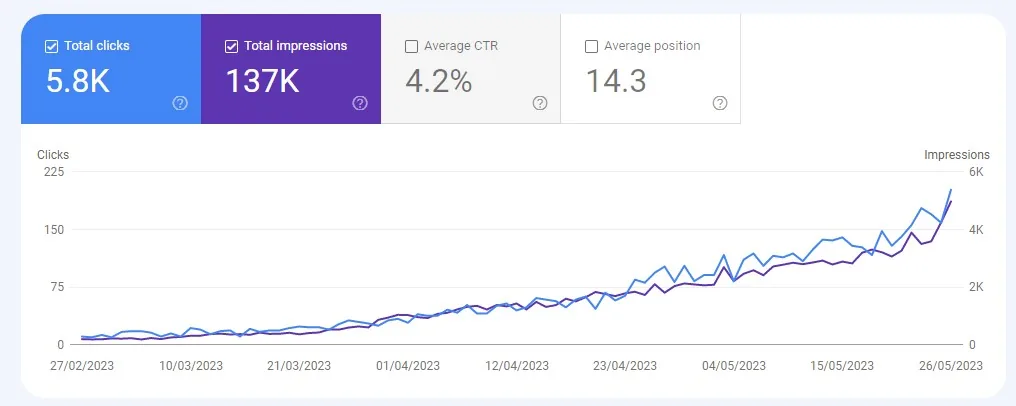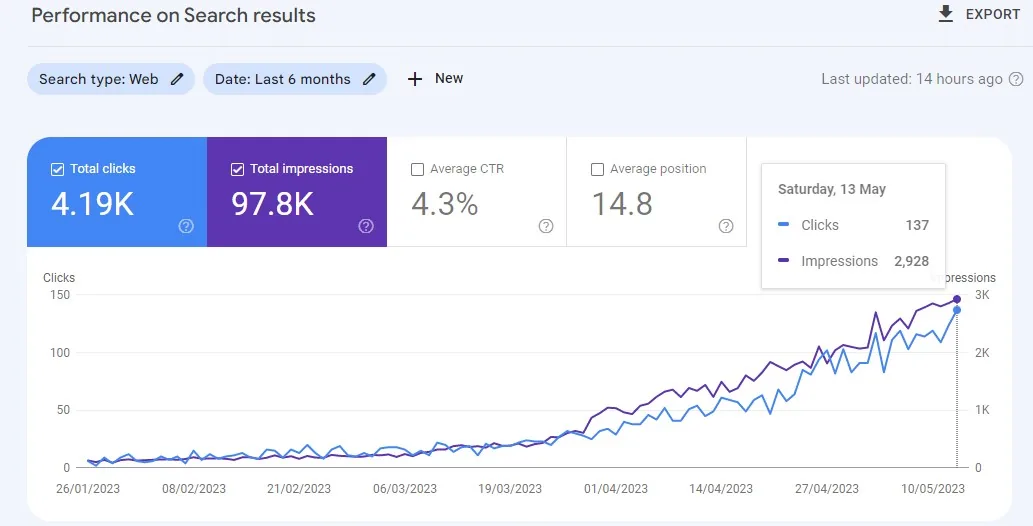









Case studies
Results, not promises.
Every number below comes from a client's own analytics, rank tracking or Search Console, so you can judge the work yourself. I keep my clients' names private, never their results.
E-commerce SEO · US wheel and tyre retailer
$1.8M in a year, then 3.9 times more search demand on page one
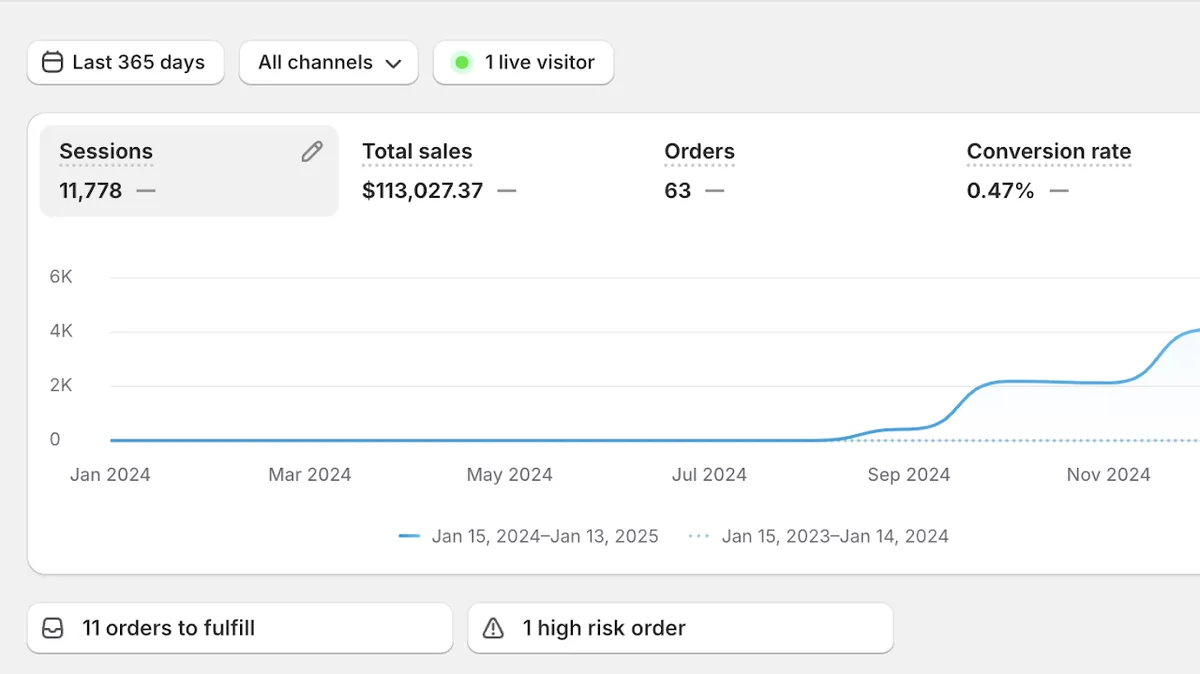
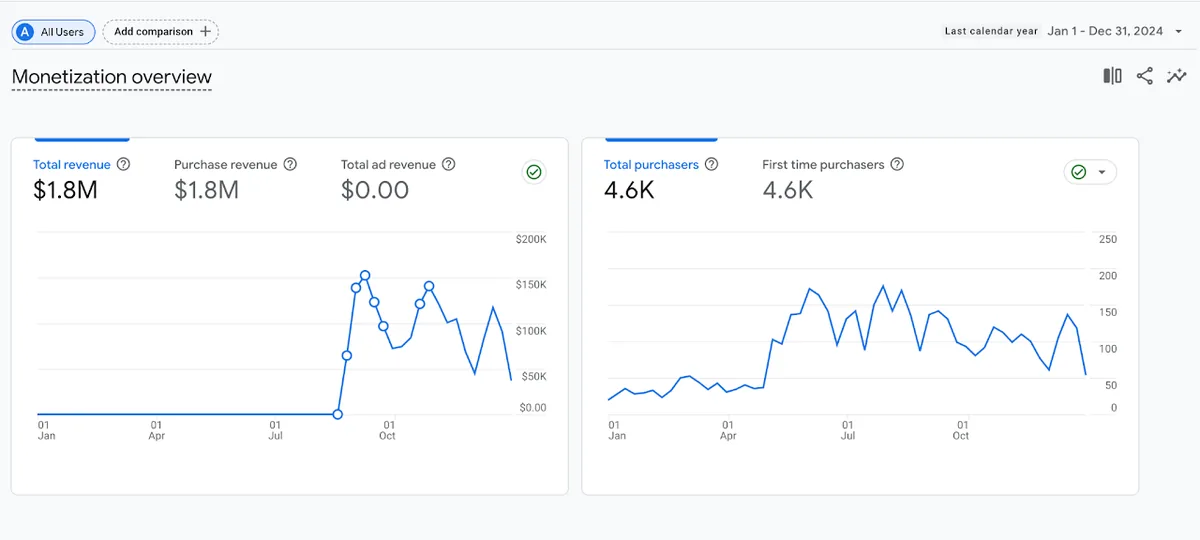
A US online wheel and tyre retailer had thousands of product pages and a site Google couldn't make sense of. I rebuilt it in 2024, and Google Analytics recorded $1.8 million in revenue that year.
When I then went after authority across 25 priority pages, keywords in Google's top 10 rose from 77 to 150, and the monthly searches those page-one rankings sit in front of grew from 59,640 to 230,630.
- revenue in 2024
- $1.8M
- keywords in the top 10
- 77 → 150
- keywords at #1
- 0 → 31
Where 223 tracked keywords ranked
Before the first new link to each page, against October 2026. Keywords in Google's top 10 rose from 77 to 150, and from none at #1 to 31.
Each bar shows how many keywords sat in that band of Google positions.
View as a table
| Position | Before | October 2026 |
|---|---|---|
| #1 | 0 | 31 |
| 2 to 3 | 15 | 54 |
| 4 to 10 | 62 | 65 |
| 11 to 20 | 51 | 39 |
| 21 to 50 | 56 | 34 |
| 51 to 100 | 39 | 0 |
Growth by page type
Switch between the search demand now reaching page one and the number of keywords ranking there.
View as a table
| Page type | Avg position | Top 10 | Page-one searches a month |
|---|---|---|---|
| Wheel size pages (8) | 15.2 to 5.6 | 41 to 67 | 34,390 to 62,080 |
| Home page (1) | 49.6 to 10 | 0 to 7 | 0 to 55,400 |
| Wheel and tyre package page (1) | 41.5 to 7.4 | 0 to 9 | 0 to 51,100 |
| Style and finish pages (8) | 28.8 to 12 | 22 to 42 | 13,840 to 44,230 |
| Vehicle and brand pages (6) | 23.1 to 13.1 | 14 to 23 | 11,410 to 14,440 |
| Financing page (1) | 54.4 to 23.3 | 0 to 2 | 0 to 3,380 |
Read the full case studyClose the case study
The situation
I'll never forget the first time I logged into this retailer's analytics. It was a major online seller of wheels and tyres in the United States, with several warehouse locations and thousands of product pages, most of them filed in the wrong part of the site.
The demand was obviously there, because people search for wheels and tyres by size, finish, vehicle and budget every single day. The business simply wasn't in position to catch it. The goal the owners and I agreed on was plain: turn a sprawling catalogue into a store that brings in buyers from coast to coast, and then keep widening the stream of buyers it can reach.
The challenge
Three problems were quietly costing sales, and each one made the others worse.
- A structure Google couldn't read came first, because the blog held product listings while product pages held random articles and the site search sent shoppers round in circles. Search engines couldn't tell which page should answer which search, so they ranked none of them well, and AI answers built on those rankings inherited the same confusion.
- Almost nobody vouched for the brand either, because its links came from a scattering of small automotive blogs that told Google almost nothing about authority in a market full of large, well-linked competitors.
- Technical drag made both problems worse, since broken links, dated metadata and slow pages tested the patience of shoppers and crawlers alike and gave even the visitors who did arrive a reason to leave.
The strategy
I ran the work in two phases, because authority spent on a broken site is authority wasted. Phase one fixed the store so that it could convert search; phase two made sure far more search reached it.
- Phase one, in 2024, rebuilt the catalogue so a shopper could move from truck tyres to SUV tyres without getting lost. I cut load times by compressing images, enabling browser caching and moving to better hosting, then added structured data for specifications, reviews and pricing so listings stood out in results.
- Phase one also matched pages to buyers rather than stuffing product pages with random terms. I mapped each high-intent phrase ("all-season truck tyres" is a good example) to the one page most likely to win it, and rewrote jargon-heavy descriptions as clear, benefit-led copy for drivers.
- To earn trust locally, I gave every warehouse an optimised Google Business Profile and asked satisfied customers for honest reviews, which built trust and local visibility at the same time.
- Phase two, from 2025 into 2026, aimed a sustained link campaign at 25 commercial pages: wheel size categories, style and finish ranges, vehicle-fit pages, the wheel and tyre package page, the financing page and the home page. Links went in on staggered windows, page by page, so I could measure each page's movement against its own starting point.
The results
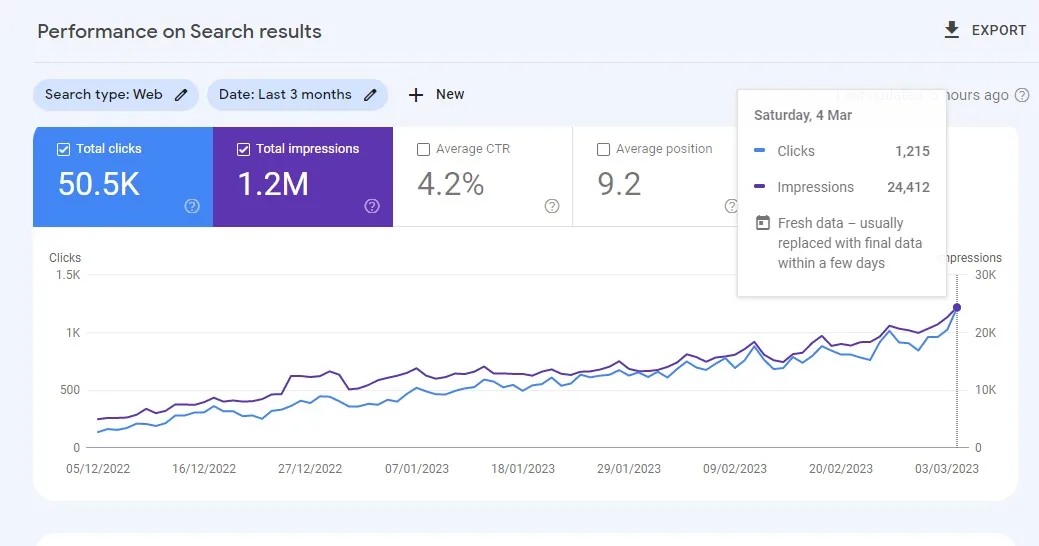
Phase one paid off first, as organic traffic surged and turned straight into tyre sales: across calendar year 2024, Google Analytics recorded $1.8 million in revenue from about 4,600 purchasers.
I measured phase two in Semrush (US organic, desktop, the top 50 keywords by search volume for each page), comparing each page's position in the month before its first new link against October 2026. Across the 223 keywords that moved, the average position went from 25.5 to 10.2. Keywords in the top three rose from 15 to 85, keywords at #1 from none to 31, and every one of the 39 keywords that had been languishing between positions 51 and 100 climbed out of that band.
The page types tell the more useful story. The wheel and tyre package page went from no keywords in the top 10 to nine, putting it in front of 51,100 searches a month. The home page went from none to seven, in front of 55,400. Style and finish pages tripled their page-one search demand, from 13,840 to 44,230 a month, and even the financing page, which started with an average position of 54.4, now averages 23.3.
The biggest group held up too: eight wheel size category pages, carrying 78 of the tracked keywords, went from 41 keywords in the top 10 to 67, and the searches those rankings sit in front of rose from 34,390 to 62,080 a month. Six vehicle and brand pages moved from 14 top-10 keywords to 23. That breadth matters, because it shows the gains came from the approach rather than from one lucky page.
Why it worked
The order did the heavy lifting, because I pointed links at pages that were already fast, well structured and clearly focused on one job, so every bit of authority landed somewhere that could use it. Pointing the same links at the old, disorganised version of this site would have produced far less, because Google would still have been guessing which page deserved to rank.
The targets were commercial on purpose, since package pages, size categories and financing pages are where people go when they're ready to buy, which is why I track the monthly searches a page-one ranking sits in front of, rather than a vanity count of keywords. That figure grew 3.9 times, from 59,640 to 230,630 searches a month.
I'm careful with that number, because search demand isn't revenue and I don't report it as such. It is, however, the raw material the 2024 rebuild already proved this store can turn into money: $1.8 million of it in a single year. Wider demand reaching a store that converts is how keyword growth becomes revenue growth.
What this means for your business
Nothing about this sequence is American: fix the structure so Google and AI systems can read your site, make every important page work for one buying search, then earn the authority that pushes those pages up. The same order works whether you run an online store in Lagos, distribute across Nigeria or sell abroad, because Google rewards the same signals everywhere.
If your site has plenty of pages but few of them rank, the problem is rarely effort. It's usually that the work happened in the wrong order. In your AI SEO Growth Audit, the first thing I'll find out is which order your site needs.